Quinn Krüger · 14 September 2026
Beyond Basic Layouts: Mastering Subtle Lane Adjustments for Superior Canvas Dynamics
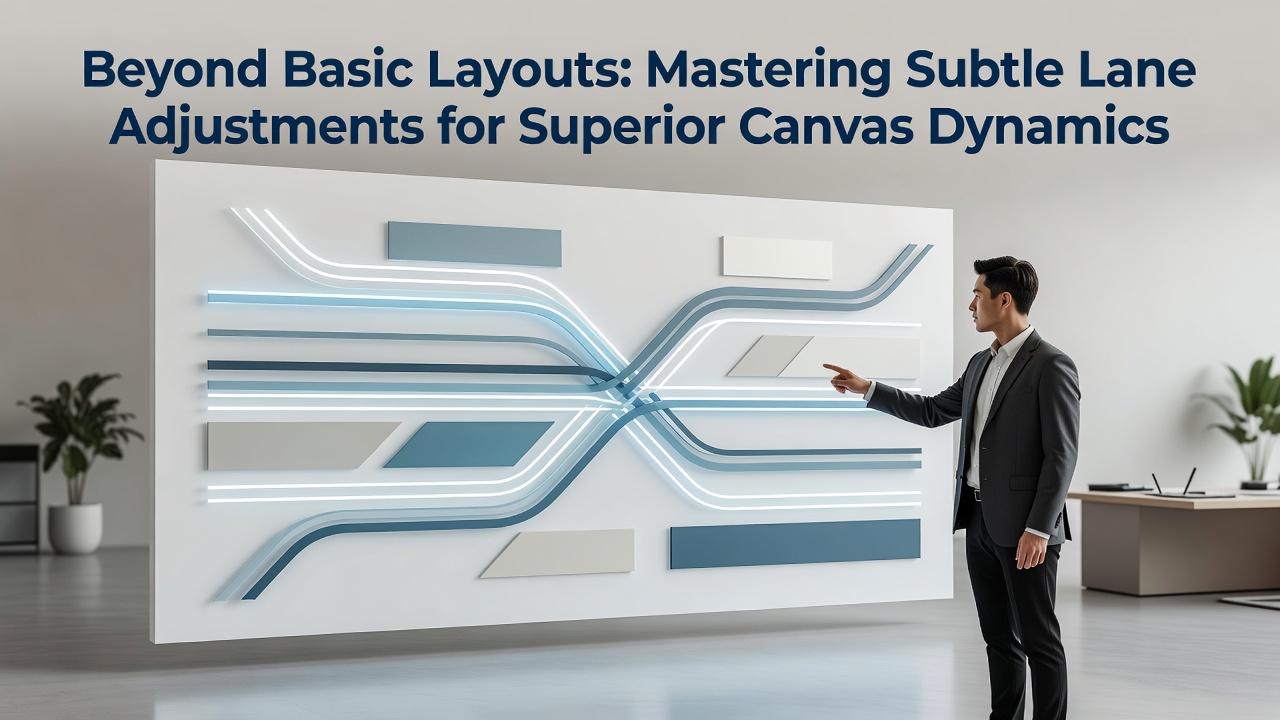
Canvas elements in web development have evolved beyond simple drawing surfaces into sophisticated platforms where subtle lane adjustments reshape how content flows and interacts across digital spaces. Observers note that these adjustments involve fine-tuning the positioning and alignment of layered paths within the canvas coordinate system, which allows developers to create more responsive and visually coherent designs. Data from industry reports indicates that projects incorporating such techniques often achieve smoother transitions between static and animated states while maintaining performance standards across various browsers.
Core Principles of Lane Positioning in Canvas Environments
Researchers have documented that lane adjustments begin with precise control over the x and y coordinates that define each path segment, and these modifications extend to velocity vectors when animation enters the equation. Studies from academic institutions show that even minor shifts in lane spacing can prevent overlap in complex compositions where multiple elements move simultaneously. According to specifications outlined by the World Wide Web Consortium, canvas rendering relies on consistent path definitions that respond predictably to incremental changes in offset values. Those who implement these methods frequently report improved rendering efficiency when lanes remain evenly distributed yet adaptable to viewport resizing events.
Techniques for Implementing Subtle Adjustments
Developers apply lane adjustments through incremental modifications to the beginPath and lineTo methods, which together establish the foundation for dynamic routing within the canvas. Evidence suggests that combining these commands with transformation matrices produces results where lanes curve or shift without disrupting surrounding content. One case study from a European research project revealed that teams using Bezier curve controls alongside lane offsets achieved fluid motion in interactive prototypes tested during 2025 development cycles. What's interesting is how these adjustments integrate with event listeners that trigger repositioning based on user input or device orientation changes.
Additional methods include the use of clipping regions that isolate specific lanes during updates, and this approach reduces unnecessary redraw operations across the entire canvas surface. Figures from design tool analytics indicate adoption rates rose notably in projects targeting mobile platforms where screen real estate demands efficient space allocation. In September 2026, updates to several major browser engines are expected to introduce enhanced support for subpixel lane rendering, which could further refine the precision available to creators working with high-density displays.

Integration with Broader Layout Systems
Canvas dynamics gain additional power when paired with CSS grid or flexbox containers that handle outer positioning while the canvas manages internal lane behaviors. Observers have seen that this hybrid model allows developers to maintain accessibility features such as ARIA labels outside the canvas while still benefiting from the granular control lanes provide inside it. Research indicates that organizations adopting this layered strategy experience fewer conflicts between static markup and scripted graphics. Experts point to case examples where lane adjustments compensated for irregular content loads without requiring full canvas redraws, thereby preserving frame rates during peak interaction periods.
Performance Considerations and Optimization Strategies
Performance data compiled by various technology institutes demonstrates that unchecked lane proliferation can increase memory usage, yet targeted culling of inactive paths restores balance without sacrificing visual complexity. Developers often employ requestAnimationFrame loops that recalculate only those lanes affected by current user actions or environmental triggers. The reality is that testing across multiple hardware configurations remains essential, since rendering differences between integrated graphics and dedicated GPUs can alter how subtle adjustments manifest on screen. A report from an Australian university lab highlighted successful implementations where lane density scaled dynamically according to available processing resources.
Conclusion
Subtle lane adjustments represent a practical extension of canvas capabilities that supports more sophisticated digital interfaces. Evidence from ongoing development practices shows these techniques deliver measurable improvements in both visual quality and operational efficiency when applied systematically. Continued refinement in browser support and tooling will likely expand the range of applications where such methods prove valuable.